Light drapes itself across a room like a whisper-slow, warm, and full of invitation. It doesn’t shout or sharpen the edges; it softens them, blurring hard corners and coaxing them calm into even the most chaotic days. When the sun slips low or the switch dims just right, the entire mood of a space can shift. It becomes less about what you need to do and more about how you want to feel. In that glow, you remember how much you want to feel. In that glow, you remember how much beauty lives in stillness.
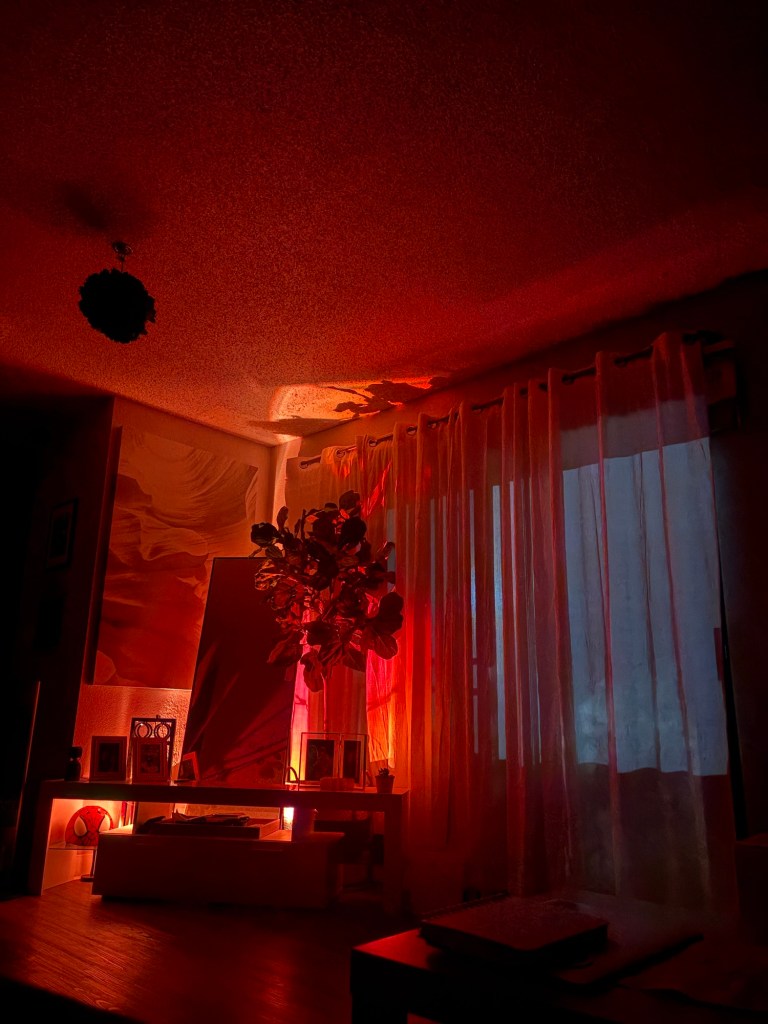
Soft lighting has a way of pulling you inward. It encourages presence, slowness, a kind of intimacy that bright fluorescents can never offer. It asks you to settle, to exhale, to reconnect-with your body, your thoughts, and your surroundings. The world beyond the walls may continue its frantic pace, but within your space, you get to choose a different rhythm.
It’s not just visual, it’s emotional. Soft lighting creates an atmosphere where vulnerability feels safe, where touch is more tender, and where even silence has warmth. The way a lamp looks amber light onto a book page, or how fairy lights hum gently in a quiet bedroom, becomes more than mood-setting. It becomes memory-making. Light becomes feeling.
In the evening, when the day finally loosens its grip, flipping off the overheads and sinking into dimmer tones feels like an act of care. It tells your nervous system, “You can let go now.” It transforms routine into ritual- skincare under a candle’s glow, tea steeped while shadows dance across the walls, even washing your face in a softly lit mirror. All of it becomes gentler, richer, more sacred.
Soft lighting romanticizes the mundane. A kitchen table bathed in golden light can feel like a Parisian café. A corner lamp can turn your reading nook into a dreamscape. Even a hallway, when kissed by a salt lamp or a low glow bulb, can hum with serenity. You being to notice textures more deeply-the weave of your throw blanket, the way your favorite mug reflects the light, the way skin glows when it’s lit by something soft and golden instead of harsh and cold.
This kind of lighting doesn’t just transform the look of a room, it shifts how you inhabit it. You speak slower. You move differently. You become more aware of the space around you, and more in tune with what it offers. When used intentionally, soft light becomes its own kind of emotional architecture. It frames your nights, your rituals, your intimacy-quietly, yet powerfully.
It also changes how we connect with others. A softly lit room feels safer to open up into. Conversation deepens when surrounded by warmth. Meals linger longer when the atmosphere invites you to stay. With partners, the invitation of soft light is sensual and magnetic. The body relaxes, the gaze lingers, the moment stretches. Affection feels heightened when shadows are gentle and nothing feels too exposed.
Even when you’re alone, soft lighting can be an offering to yourself. It becomes a silent kind of affirmation: that you’re worthy of slow evenings, of warmth, of comfort. That you don’t need to earn beauty or softness or rest. You can simply choose it. The light you set for yourself tells your body that home is a place to be cherished, not just lived in.
There’s something ethereal about how light touches the world as it fades. Sunset hours, candlelit baths, golden bulbs behind linen lampshades-these moments have always been portals. They pull us out of the grind and into something more sacred, more sensual, more still. And in a culture so obsessed with doing, that stillness is radical. Soft lighting becomes an act of resistance. Of presence. Of pleasure.
So maybe it’s not just about how your room looks, but how it feels to be inside it, how it holds you. How it becomes a part of your emotional landscape. The glow that kisses your walls at night might just be the gentlest way to remind yourself: I deserve to feel good here. I deserve softness, too.
Let the glow guide you.
 Lanalefay
You must be logged in to post a comment.